
Termites – Undetected entry into Buildings
Termites – Undetected entry into Buildings, new and renovated. author; Christopher E. Langley (termite consultant to QBCC)
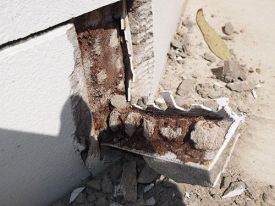
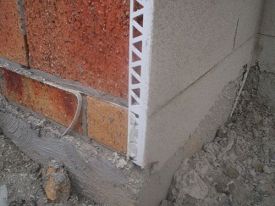
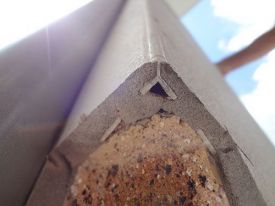
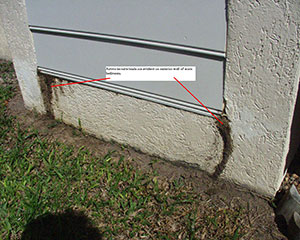
Termite building access around perimeters
Before 1995 soil barriers were almost exclusively relied upon against subterranean termite entry from beneath and around the perimeter into buildings.
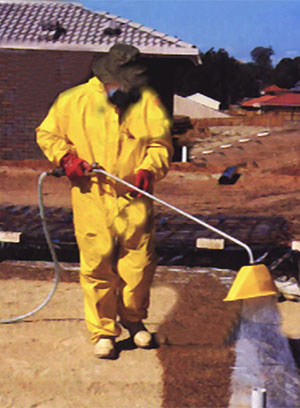
Chemical hand spray beneath slab-on-ground.
Removal from use of Organo-Chlorine compounds for termite management like “Dieldrin and Heptachlor” and a greater acceptance of slab-on-ground construction saw physical termite barriers as alternative solutions in accordance with Building Codes, included in Australian Standards and adopted by some Local Authorities.
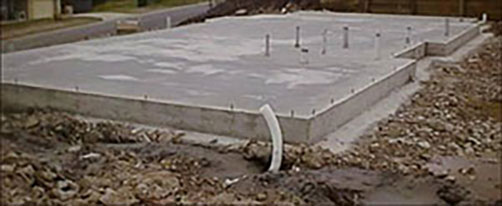
Slab-on-ground construction.
A residential concrete slab constructed to A.S. 2870 -1996 could from then be relied upon as an integral part of an acceptable termite barrier provided areas to the construction where subterranean termites might gain concealed entry into buildings received a termite risk management measure/s, heralding an influx of physical termite barrier products as Deemed-To-Satisfy in accordance to A.S. 3660.1-2000.
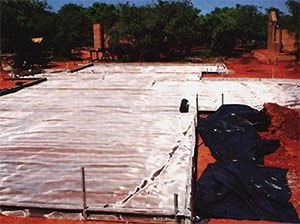
Stainless Steel Mesh fully laid beneath slab.
The introduction of the CodeMark Accreditation Scheme in 2005 saw physical termite barriers meet compliance under the Building Code. This provided the acceptability sort by architects, building certifiers, builders and the credibility wanted by the various physical termite barrier manufacturers.
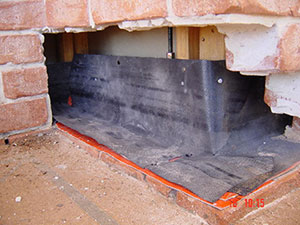
A primary function to slab perimeter installation of a passive or an active physical termite barrier i.e. ‘Termimesh’ and ‘Kordon’ respectively, is the provision for regular visual inspection at the outer face edge, usually in the same masonry course as the dampcourse level to the building’s finished external wall.
Kordon Perimeter wall installation.
The Duty of Care is the licensed builders’ for new building work and subject to the contractual requirements the sub-contractor, who must ensure such provision of the visual termite inspection point is not interrupted through later building works.
Combined Kordon & TERM-Seal, Builder’s later trade work i.e. raised patio, Perimeter termite barriers installed & external rendering bridge physical perimeter termite barriers.
When the external wall of a residential building is cement render or texture coat on masonry and where there is a physical termite barrier installed it shall be finished flush with the outside face of the rendered or texture coated wall. Alternatively, if there is to be a control joint in the rendering at the course in which the physical termite barrier is installed, the physical termite barrier shall finish flush with the masonry.
There have been reported instances of subterranean termites bridging a correctly installed perimeter physical termite barrier, having no exposed point of entry into the building which sustained a major termite infestation.
New building methods exploited progressivley by temites to gain concealed entry into building.
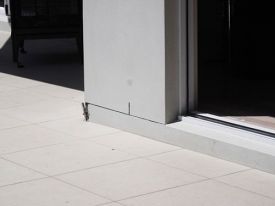
The practice has emerged of affixing to external corner rendered walls vertical poly-vinyl chloride or poly-ethylene ‘trim’ / ‘beads’ where there is a physical termite barrier in place. Additionally, the ‘trim’ / ‘bead’ has sometimes replaced sill tiles to external rendered walls at the base of large doorways, for added toughness against pedestrian damage.
Termites have utilised this form of defect through bridging by building works over the physical termite barrier visual inspection point at perimeter external walls which by termite infestation and termite damage, being considered a Category 1 defective work.
Physical termite barrier manufacturer’s have long been aware of this building practice and some include a technical detail to their installers manual but builder’s contractors fail to alter the manner of ‘trim’ / ‘bead’ fix and rendered application.
Builders and Contractors must adhere to the requirements of an appropriate termite barrier system to residential buildings, be educated to the risk their actions may provide and the outcome in expensive repairs where they may be deemed liable.